Category Archives: ICAPGen member spotlights

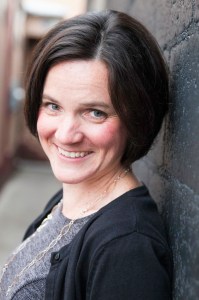
Meet Jenny Hansen: Accredited for Research in Denmark

jenny-hansenAccreditation

Jenny received her accreditation in 1999. She noted that Jimmy Parker signed her original certificate. She stated that: “All along I figured that if I’m going to be a genealogist, I don’t want to be ‘just another hobbyist.’” She was very young at that time…only 22. She was one year out of college and had no idea how much she would actually work as a genealogist. Now, after 17 years and four children, she is so happy that she made the effort to accredit when she did. At her first renewal period, she had two tiny children and she really questioned if she had it in her to create a renewal portfolio. She has never regretted the effort she makes to keep her credentials up to date. She is a full-time mom and a part time genealogist. She loves having a pretty awesome career on the back burner of her life.

Challenging and Unique Aspects of Danish Genealogy

Jenny related that one of the great things about Scandinavian research right now is that so many of the records are available online and free. The access to records is amazing. She feels that with the increased access, more people are trying to do their own research. It’s really easy to become frustrated and overwhelmed when looking at old church records and the old styles of handwriting.  She further shares that another unique part of Scandinavian research is the use of patronymics. It really blows people’s minds because it’s very foreign to our naming practices now. Scandinavia basically used every combination of about ten names for males and another ten for females. One very quickly discovers how easy it is to be tangled in a web of Hans Jensens and Jens Hansens. She likes coming in to “save the day” with her expertise.

Advice for Other Pursuing Accreditation

Jenny’s advice: “Work Hard!” She further advises to spend a great deal of time in the records—even more than it seems should be done. She feels that accreditation is really the starting point of becoming an expert. There is so much to learn that one can easily become overwhelmed. Although accreditation is a good measure of proficiency, it does not mean that a person knows everything.

Goals

“I always want to be better.” This is Jenny’s stated goal. She feels there are different levels of “expert” and she definitely knows what she does not know. She is looking forward to attending SLIG this year because they are offering an advanced Scandinavian research track with classes about probates and other less-used records. There are several AG researchers in her geographic category that are a generation ahead of her and she admires their depth of knowledge. She looks at that class of genealogists as the “head experts” and she states, “When I grow up I want to be like them.”

Current and Future Research Projects

She is currently involved in work for several clients. Primarily, she is working on filling in old pedigree charts so that they have full family groups. A lot of what she does lies in the oldest church records in Denmark that are written in Gothic script. That provides a unique challenge for learning. She says, “I frequently find myself thinking, ‘There’s a reason that you can’t train monkeys to do this.’” Jenny loves to teach. She feels that over the years of doing this, she has become pretty good at it. While her niche is Scandinavia, she feel that there is something awesome about being in a room full of beginners and seeing their faces as the concept clicks. She said, “It’s a fun vibe.”

Meet Kathleen Hedberg: Accredited for Research in Sweden

kathleen-hedbergWhat motivated you to pursue accreditation?

I was motivated to pursue accreditation because I wanted to see whether my experience in learning about and researching my own Swedish ancestry for over thirty years had made me an expert in Swedish research.  I also enjoyed helping friends with their Swedish research, and thought it would be interesting to do this professionally.

What are some challenging or unique aspects to researching in your area of accreditation?

Sweden has some of the best records in the world.  The most important of these are available on multiple sites online and more are coming on line continually.  Keeping up with them all is a challenge!

Also challenging is the Swedish naming system, with its patronymic names for the majority of the population and its relatively few given names that were used over and over again.  This leads to some interesting situations, such as two couples with the same first and last names living in the same parish, or a person having two spouses with the same names. In addition to the patronymic names, there are military names, surnames that higher class people used, and names used by trades people.  If it were not for the excellent Swedish records, and the fact that people were also identified by the name of the farm or village in which they lived, Swedish research would be impossible.  But those great Swedish records make Swedish research not only possible, but also fun and very satisfying.

 What advice do you have for those pursuing accreditation?

My advice for those pursuing accreditation would be to learn all they can about their area of interest, to gain a lot of experience researching their own and their friends’ ancestry in that area, to take advantage of all the classes and helps that are offered, and to keep trying!

What are some of your goals as a genealogist?

My goals as a genealogist are to continue learning about and using the many records now coming online which will enable me to extend my own ancestral lines and better help other people. I also want to “give back” to the larger family history community by continuing to teach classes locally on how to do Swedish research, by continuing to index Swedish records, and by continuing to add information to the Family Search Swedish Wiki for the parishes that I am most experienced with.

 What research projects are you involved with now, or have planned for the future?

Currently I am helping a family extend their ancestral lines in Värmland into the early 1600s by using tax and court records that have recently become available online.  I am also researching my grandfather’s ancestors who were skilled workers living in cities in the Dalarna area.  I continue to review the information that I have entered in online sites such as Family Search Family Tree, making corrections and adding additional sources and information where needed.

Do you have a website you would like to have mentioned?

My website gives information about my grandmother’s ancestry in Karlskoga parish, and includes extensive genealogical information about all of Karlskoga in the 1600s. It is entitled Genealogy in Karlskoga, Örebro, Sweden.

When did you receive your accreditation?

I received my accreditation in October 2006.

 Is there anything else you want to let us know about your genealogy experience or activities?

I received a PhD in history from Brigham Young University in 1985.   My dissertation was Land, Family, and Inheritance Patterns in a Seventeenth-Century Swedish Community, for which I did extensive genealogical research in the parish, tax and court records of Karlskoga, Örebro, Sweden.  My work as a historian included writing two books on local history, one of which won the Idaho Library Association’s Book of the Year award.