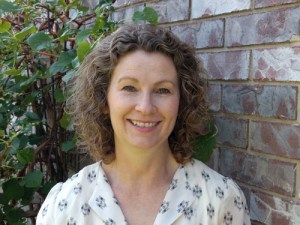
Diana Elder was recently accredited in the U.S. Gulf South region. We enjoyed getting to know her as she answered a few questions for us.
What motivated you to pursue accreditation?
One day my daughter asked, “Mom, have you ever thought about getting a credential and becoming a professional genealogist?” She had been doing some research on certification and thinking of starting a portfolio.
We had started genealogy research together in 2003 when my dad gave me a suitcase full of his research of the past 30 years. We had both just been called as Family HIstory Consultants in our LDS wards and were having fun teaching others the skills we had learned.
I knew several Accredited Genealogists and one in particular was a good friend. When I asked her about the process, her response was, “it’s so much work!” Now I totally understand that answer.
With accreditation on my mind, in July of 2015 I decided to attend the BYU Conference on Genealogy and Family History and take the accreditation track of classes to learn more. About halfway through I realized that this was something I could do and that I wanted to do. I was particularly impressed with the idea this would make me a better researcher, regardless of anything else. The presenters also emphasized that earning a credential would open doors in the field and that became my motivation.
I decided to go public with my aspiration and in January of 2016 wrote a blog post titled “Goal for 2016 – Become an Accredited Genealogist.” Putting my goal out there for everyone to see motivated me to finish. Although I had to extend to 2017 for completion, writing about my progress helped keep me on track and hopefully has encouraged others to also think about accreditation.
What are some challenging or unique aspects to researching in your area of accreditation?
The Gulf South area is full of challenges. My paternal line is all out of the south and for several years I didn’t realize that other research areas actually have good records to use for genealogy. Record loss, ever-migrating ancestors, Native and African American research, Spanish, French, and Mexican influences in the region all make the Gulf South area fascinating and challenging.
What at advice do you have for those pursuing accreditation?
If you’re interested in accreditation, find a friend who is also working towards that goal. I made several friends in the BYU track of classes and one in particular became my study buddy. It definitely helped to have someone else to discuss the four generation project with and prepare for testing,
Set small doable goals. I made a list of everything I needed to do and set myself a schedule. In the midst of my work, I had two weddings and two new grandbabies, so I had to adjust a bit. But I eventually finished!
What are some of your goals as a genealogist?
I have a basic understanding of using DNA in research, but want to become proficient in this new and changing aspect of genealogy. I’ll be taking the SLIG DNA course in 2018 and hope that will give me some new practical tools and organizational methods for using DNA.
I also want to work on African American and Native American research, honing those skills. As a RootsTech 2017 ambassador I was able to talk with Kenyatta Berry, Angela Walton-Raji and other African American genealogists. All expressed the importance of making any record that we come across naming enslaved people available for researchers. With several slave-holding ancestors, I’d like to give back to the community and do just that. I’ve written a few blog posts releasing the names of enslaved people and want to continue helping with this effort.
What research projects are you involved with now, or have planned for the future?
I’m currently working on identifying the parents of my 3rd great grandmother, Cynthia DIllard born about 1816 in Georgia. As with almost all of my southern ancestors, I’m building a case of indirect evidence through land, tax, court, and census records. She had fourteen children, including a set of twins and sent five of her sons to fight in the Confederacy. Only two survived, one being my 2nd great grandfather. When her husband died in 1868 leaving her with their large plantation in the aftermath of the Civil War, she packed up and moved to Texas with the younger children.
I have several more brick walls that I hope to break through with DNA testing, all southern research of course!
Do you have a website you would like to have mentioned?
My daughter, Nicole Dyer, invited me to start writing a family history and genealogy blog with her two years ago and our website FamilyLocket.com. was born. What began as two family history consultants writing how-to articles has blossomed into a resource for families, teachers, consultants, researchers – basically anyone with an interest in family history.
We launched our services page once I received my credential and I’m currently leading our very first “Research Like a Pro” study group. Composed of intermediate to advanced genealogists, I’m teaching the group members skills I learned during my journey to become a professional genealogist. Several of them are interested in the accreditation process and I hope to encourage them that they too can do it!
When did you receive your accreditation?
I might be the newest Accredited Genealogist researcher, receiving my credential on July 12, 2017, almost two years exactly from attending the BYU Conference and deciding “I could do this.”
I presented several classes at the BYU Conference this year as an official Accredited Genealogist researcher and will be presenting at RootsTech 2018. I feel incredibly blessed to be starting a career doing the things I love – researching, teaching, and writing about family history.
 ICAPGen℠