ICAPGen™ Professional Spotlight
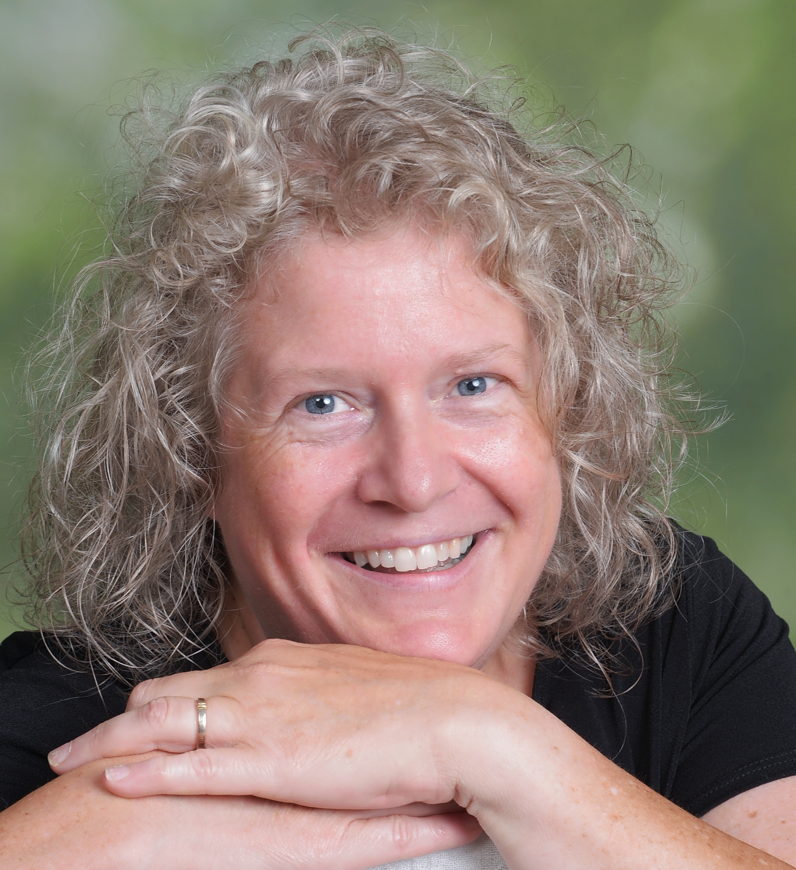
We are pleased to introduce you to Jennifer Zinck, CG®, AG®, AGL™, who recently received her accreditation in the New England Region, and also in Lecturing. Congratulations to Jennifer on her double accomplishment!
Please share why you believe in ICAPGen and our mission
I believe in ICAPGen’s mission because it emphasizes research skills, regional knowledge, and ethical practice. I value ICAPGen’s focus on competency and accountability, and its role in strengthening public trust in genealogical research.
How has ICAPGen been a good fit for you?
ICAPGen has been a good fit because it aligns closely with how I approach genealogy. My work is locality-based, record-driven, and focused on logical reasoning. Much of what I do involves revisiting long-standing assumptions and explaining clearly how the evidence supports—or does not support—a conclusion. The accreditation process introduced me to concepts that I have integrated into my day-to-day practices as a working genealogist.
Are there personal details you’d like to share about yourself?
My husband and I live in Connecticut. We are the parents of four young adults, and we have two grandchildren, who are the apples of our eyes. I am a Leave No Trace Master Educator (Level 2 Instructor), and I enjoy camping, hiking, and being outdoors. My “happy place” is anywhere near a river or the ocean. I don’t spend much time crafting these days, but I love my Cricut machines.
Please share your past history in genealogy
My first formal genealogical education was the ProGen Study Group (ProGen 13) in Fall 2011, where I met colleagues I still call friends today. In Fall 2012 I enrolled in the Boston University Genealogical Research Certificate Program, and my intention was to learn how to do genealogy as well as a professional would do it, so that I could do my Grandma’s genealogy right. That was my reason for beginning, and at some point genealogy enveloped me.
Genealogy turned out to be a perfect fit because I am a perpetual student! I have since taken dozens of institute courses, taught in some, and returned to teach as an Instructor of the Forensic Research module in the BU program for twenty semesters.
I now operate a genealogical research business focused on complex cases, including parentage questions, identity reconstruction, and conflicting or long-standing published claims. My areas of specialty are Connecticut and New England research, with additional work in forensic genealogy and DNA analysis. I teach and present nationally on genealogy methodology, record analysis, peer review, and historical context, and evolving technologies like DNA and AI. My work includes conference presentations, webinars, and professional development programs, as well as mentoring genealogists pursuing credentials. I accept limited editorial assignments.
I have been a Trustee of the Board for Certification of Genealogists since October 2024 and have served as President of the Connecticut Professional Genealogists Council since 2015. I am also BCG’s representative to the Records Preservation and Access Coalition, where I represent genealogists and work with state and federal legislators on issues affecting genealogists, libraries, and archives. I serve in additional leadership and volunteer roles within the genealogical community.
What motivated you to pursue accreditation?
I originally pursued ICAPGen accreditation while teaching in the Forensic Research Module of Boston University’s Genealogical Research Certificate Program. Students frequently asked questions about professional credentials, and I did not want to speak about a process I had not personally experienced. I felt it was important to answer those questions accurately and from firsthand knowledge.
Over time, the accreditation process changed my outlook as a genealogist. For many years, my research focused primarily on 1850 to the present. Through the ICAPGen Study Group process—and with encouragement from my study buddy—I became much more comfortable working in the 1750 to 1850 timeframe, where vital records are scarce and conclusions rely heavily on context, indirect evidence, and careful analysis. The experience fundamentally impacted my genealogical interests, and now I occasionally find myself using a record from the 1630s.
What are some challenging or unique aspects of researching in your area of accreditation?
Connecticut research presents particular challenges due to early settlement, town-level recordkeeping, and complex legal history. Researchers must understand colonial and state law, town governance, church practices, land and probate systems, and shifting boundaries. Records are often fragmented across multiple repositories, making context and careful analysis essential.
What advice do you have for those pursuing accreditation?
Approach accreditation as a learning opportunity, not just a credential to earn. Know your locality deeply, including its records, laws, and historical context. Practice explaining your reasoning clearly, including any uncertainties. Be open to feedback—it will strengthen your work.
What research projects are you involved with now or have planned for the future?
My current work includes several complex New England research projects involving early Connecticut families, migration networks, and unresolved parentage questions. Much of this work requires reconstructing evidence from town, land, probate, church, and court records and analyzing that evidence within its legal and social context, supplemented by genetic evidence. I am also working on a couple of articles and the webinar content for the presentations I will give this year.
What are some of your goals as a genealogist?
My goal is to continue to evolve my genealogy skills and record knowledge. I would eventually like to have more time to work on my own family, the reason I learned to do genealogy in the first place.
Do you have a website you would like to share?
 ICAPGen℠